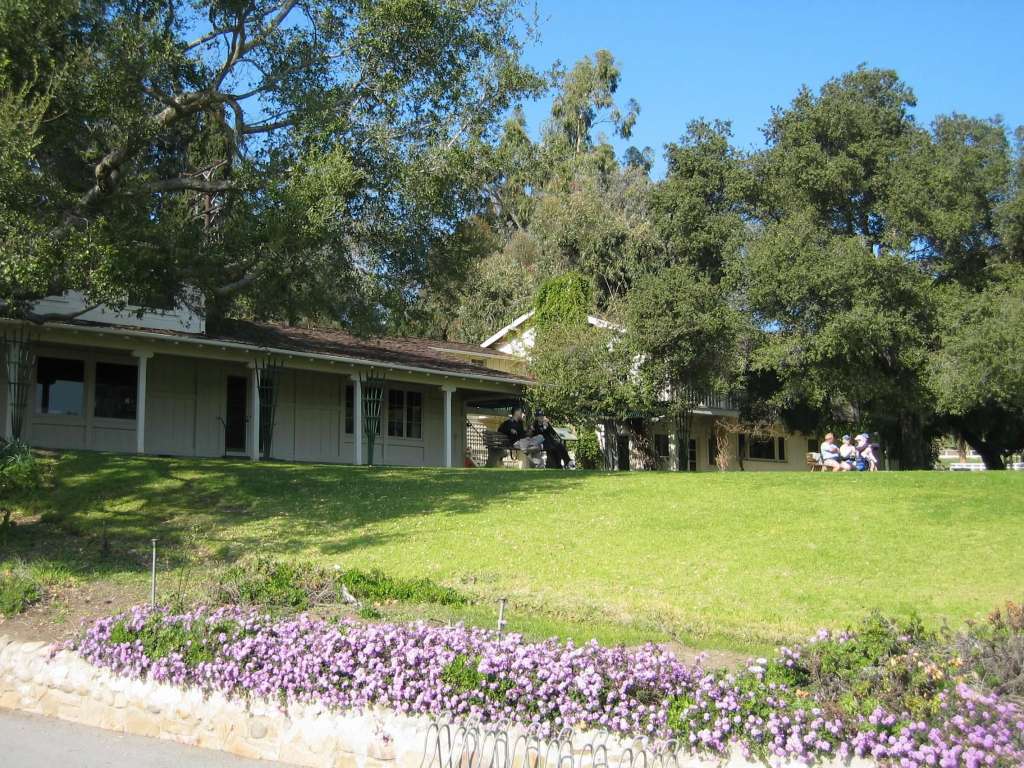
The photo above is of the historic ranch house, once owned by Hollywood vaudeville and follies star Will Rogers, at Will Rogers State Park in Pacific Palisades, CA. This photo was taken by yours truly in January 2004 following a hike around the grounds and nearby trails surrounding this verdant, urban oasis on the western end of America’s second-largest city.
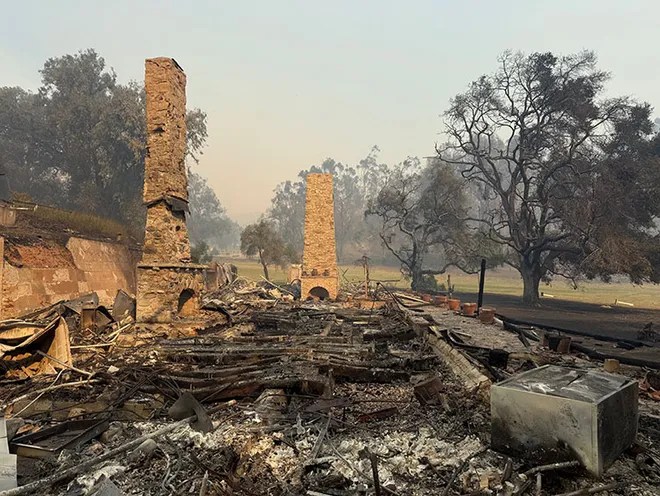
The photo below is of the same house. This photo (courtesy of California State Parks) was taken 21 years later, on January 9, 2025. The ranch house burned in the Palisades fire of 2025, still ablaze as I write this and on track to be the biggest wildfire in California history.
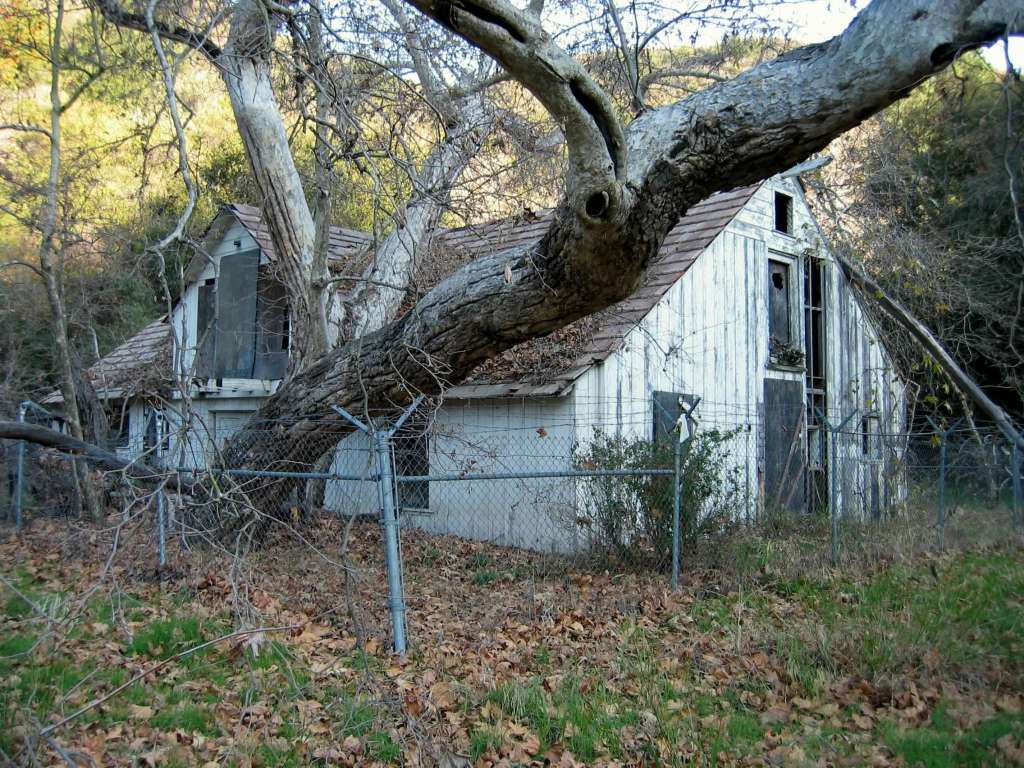
The barn in the photo above is a spooky structure with an even spookier history. The building served as stables for the sprawling Murphy Ranch complex, a series of structures in various states of disrepair along the bottom of Rustic Canyon, immediately west of Will Rogers State Park and accessible from a pair of trails along the park’s periphery. I took this photo in January 2004.
Pictures of the barn, post-fire, are unavailable at press time, but since the fire has changed direction, sparing Santa Monica and heading west instead, towards Sepulveda Canyon and the 405 freeway, my gut tells me this barn is no more.
Why am I posting this on my author webpage, you ask? Two reasons: 1) I would like to share information on how you can help with disaster recovery and assistance, and 2) Rustic Canyon happens to be the setting for my next novel, a horror tale of the same name.
The novel
Rustic Canyon is haunted. No really, it is. Not just by flames, and not just by the mountain lions and rattlesnakes that call this canyon home. Rustic Canyon is haunted by history.
During the early days of World War II, before the U.S. entered the Great War, Nazi sympathizers and allies lived in secret throughout the United States. Hitler, whose vision exceeded his grasp of simple logic, imagined spreading Naziism to the U.S. once Europe was brought to its knees. It was then that his supporters would come out from hiding. Key among them was a Nazi, Herr Schmidt, who built a residence at the bottom of Rustic Canyon and, perhaps single-handedly, built it into a self-sustaining compound. He was in the process of terraforming the impossibly steep chaparral and coast live oak hillsides to grow produce when, finally, authorities intervened, arresting Herr Schmidt on December 8, 1941, the day after FDR declared war on Germany and Japan.

The buildings in Rustic Canyon, also known as Murphy Ranch after the original landowner, Jessie M. Murphy, were later used as an artists’ colony. With time, the hippies moved on and the buildings were reclaimed by the decades and the elements. The concrete structure pictured above and below, features a corrugated metal roof and was, I think, the home to Herr Schmidt. Nearby, a rusted iron hulk represents the power house that may have fed electricity to the building. Not far from there is the aforementioned barn that I have little doubt burned in the ongoing fires.

Today, the idea of a lone Nazi fortifying an entire canyon seems like little more than an urban legend. I suppose the official history has been lost to time. Still…what a cool setting for a horror novel!
A network of overgrown paths connect Rustic Canyon with Will Rogers State Park, and I’m told that anyone with the patience of Job can boulder-hop across year-round Rustic Creek all the way to the canyon’s northern terminus, near Tarzana. (I tried once, but turned back at the halfway point after a series of fallen trees, unmarked forks in the creek, and prohibitive poison oak overgrowth discouraged any further progress.)
There are some who believe Rustic Canyon is haunted. I read reports on (the now defunct website) localhikes.com from hearty hikers who claimed that they felt as if someone was following them, or that they heard the sound of children laughing near the barn, only to reach the barn and find they were alone after all. A series of concrete stairs near the ruins lead up, up, and up the hillside, seemingly to nowhere. A waterfall, downstream from the ruins and likely manmade, makes for a pretty picture but has not avoided the touch of graffiti taggers. A scant trail provides safe passage around the cascade, but I opted for a freehand climbing approach instead during one particular ramble, and almost fell to my death. I’ve seen (and in one case heard, but didn’t see) rattlesnakes along the trail. I’ve swallowed spiderwebs, brushed along poison oak, and found myself picking ticks off my clothes. Honestly, this place is terrifying.

I won’t go into greater story detail at this time, as I still have a year’s worth of writing and editing to do, but I’ve hopefully painted enough of a canvas to suggest that Rustic Canyon is a deeply unsettling place, before and after the Palisades fire. If my novel is half as spooky as the canyon itself, I’ll consider it a success.
Look for “Rustic Canyon” to hit shelves in late 2025 or early 2026.
How you can help
I don’t envy the firefighters and other responders whose job it is to battle this horrific blaze. The Palisades fire, and nearby Eaton fire, in Altadena, are barely contained after almost a week of firefighting, thanks to unusually dry conditions and to seasonal, Santa Ana wind gusts as high as 100 mph. Over 37,000 acres have burned as of January 12, and 16 people have perished. Governor Newsom is engaged and communicative, but all the attention paid by him and Mayor Bass matter little considering that some hydrants pumped no water at all, because of overuse, budget cuts, or both.
How can you help? First and foremost: If you live in SoCal, stay home! Keep the roads clear so firetrucks have clear passage to the front lines. Conserve water use. Keep those showers short! If you live in fire-adjacent neighborhoods like Santa Monica, Brentwood, Encino, or Arcadia, have a few bags packed so you can quickly evacuate if authorities ask you to do so. Do not second guess them.
If you know anyone displaced by the fires and in need of shelter following the loss of their home, you can refer them to the following resources:
* Covenant House California – located at 1325 N. Western Avenue in downtown Los Angeles and providing outreach for young people ages 18-24.
* Westwood Recreation Center – located at 1350 Sepulveda Boulevard in Los Angeles and geographically convenient for those displaced by the Palisades fire.
* YMCA of Metropolitan Los Angeles has opened its doors to evacuees. According to LAist.com, the organization requests that you register online first, if possible, here.
* Airbnb has partnered with the non-profit resource directory 211LA to offer free shelter to those affected by these fires. Per LAist.com, start by filling out this form. Airbnb’s website also includes a link for fire-related donations.
Bear in mind that the information above, including the number of available beds, may be subject to change.
This NBCNews.com article offers good general advice, tips on how not to be scammed, and a list of vetted charities. Note that shelters are in greater need of toiletries, including diapers and wipes, than of clothing and blankets.
Finally, a non-profit that I have supported in the past, the Santa Monica Mountains Trails Council, coordinates trail maintenance efforts, including trail rework following landslides, the amount of which will surely be unprecedented after the first winter rains douse the lands affected by the Palisades and Eaton fires. (In years past, the SMMTC has also led group hikes along the 67-mile Backbone Trail, which begins at Will Rogers State Park and ends at Point Mugu State Park.) If you believe in supporting and maintaining open-air recreational spaces, I can vouch for the SMMTC as a worthy organization.
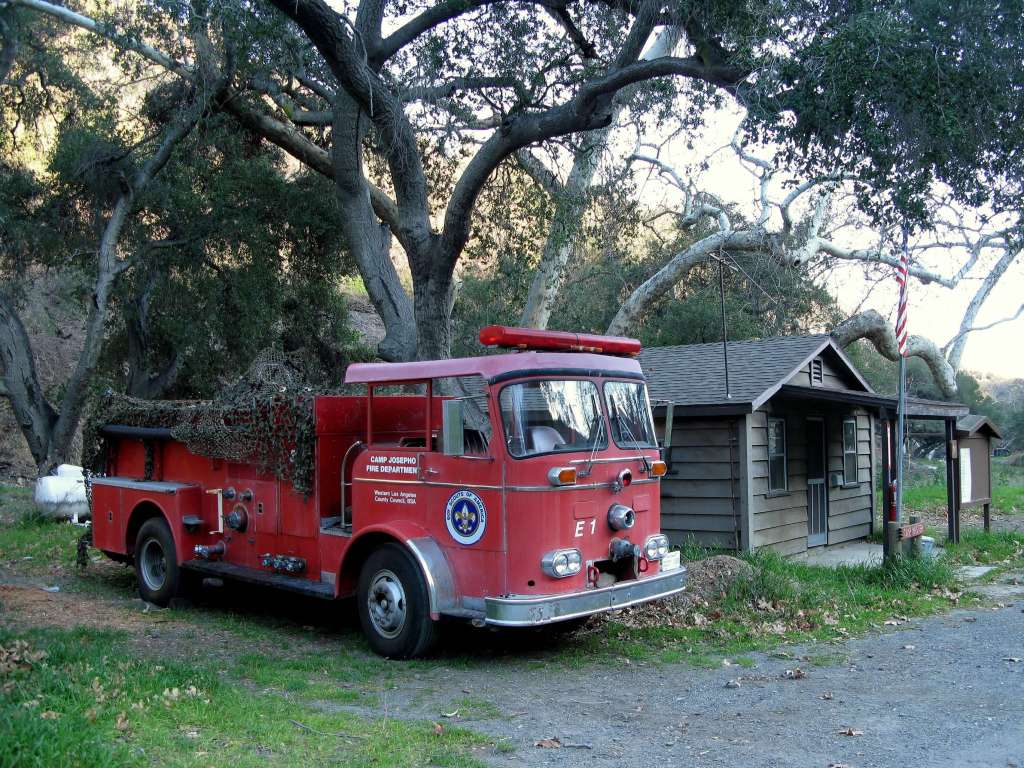
Wildfires are to California like penguins are to Antarctica. This, too, shall, pass, and I have little doubt that most displaced homeowners will return to rebuild. At present, however, the outlook is bleak. Our first responders need all the positive vibes we can muster, and residents forced to flee deserve our goodwill. I hope, when my novel is finished, that I can donate a percentage of the profits to the SMMTC or a similar organization, but I won’t know until the book is finished and I can better gauge dimensions and printing costs. It’s not about me, of course. It’s about doing the right thing.
Meanwhile, please help if you can.
 Scott G. Skinner - Writer
Leave a comment